Heritage of Gujarat
Gir
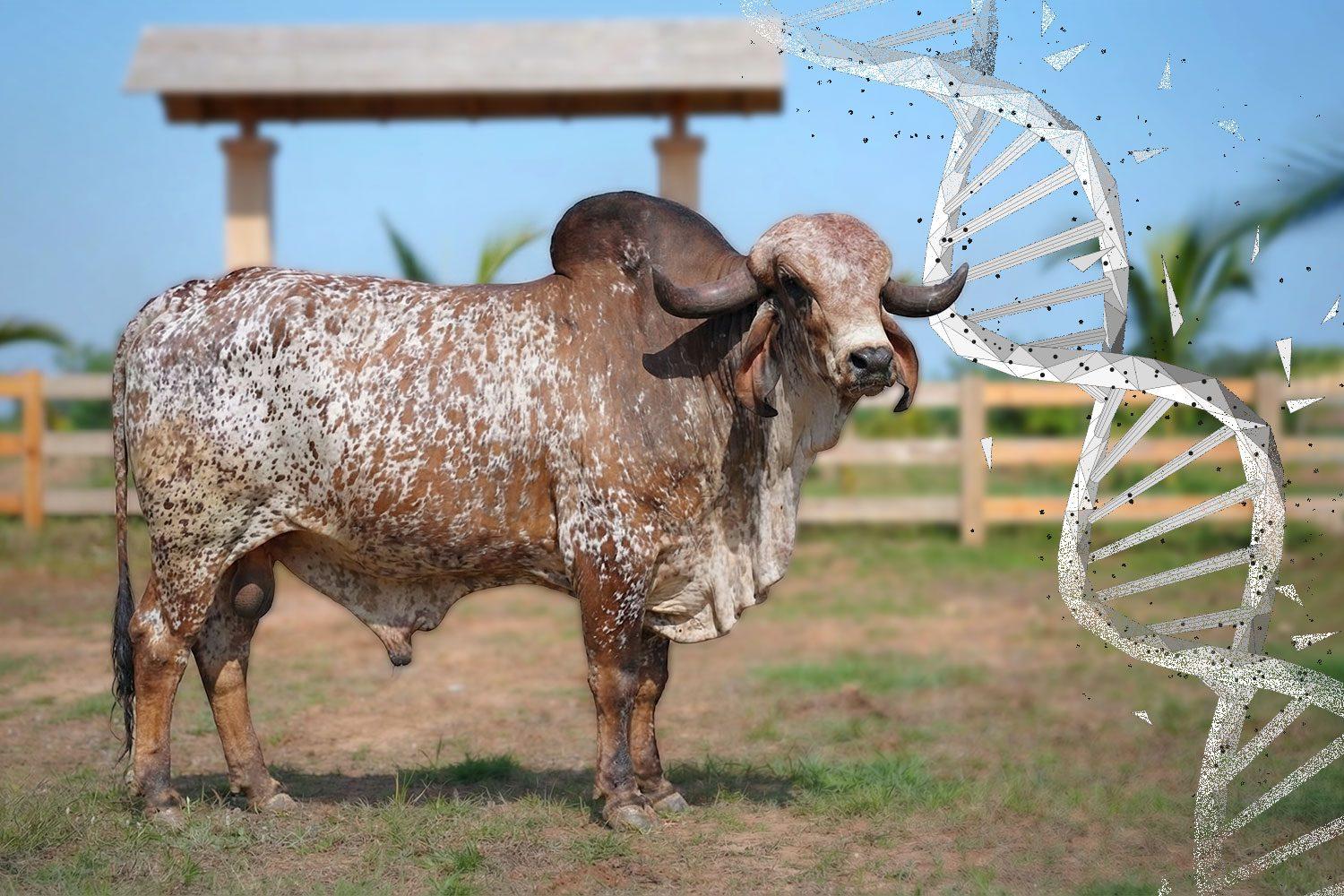
Gir is one of India’s best-known dairy breeds and the foundation of Brazil’s tropical dairy industry. It is hardy, heat-tolerant and gives rich milk, and it responds strongly to selection, which is exactly what IVF multiplies.
Cattle · Bos indicus (zebu)
- Docile nature
- Heat tolerance
- Disease resistance
At a glance
Two kinds of number, side by side: what this breed typically gives under good management, and the national breed average recorded by ICAR-NBAGR across every kind of farm.
- Litres a day, good management
- 12–15
- Hebbevu’s typical range
- Per lactation, national average
- 2,110 kg
- ICAR-NBAGR breed average
- Milk fat
- 4.6%
- Cow body weight
- 310 kg
Breeding-tract studies record lactations of about 2,030–2,060 litres over 320–326 days.
Getting to know the Gir
Where it comes from
Amreli, Bhavnagar, Junagadh and Rajkot districts in the Saurashtra region of Gujarat, in and around the Gir forest.
Named after the Gir forest.
BhodaliDesanGujaratiKathiawariSorthiSuratiHow to recognise it
- Coat
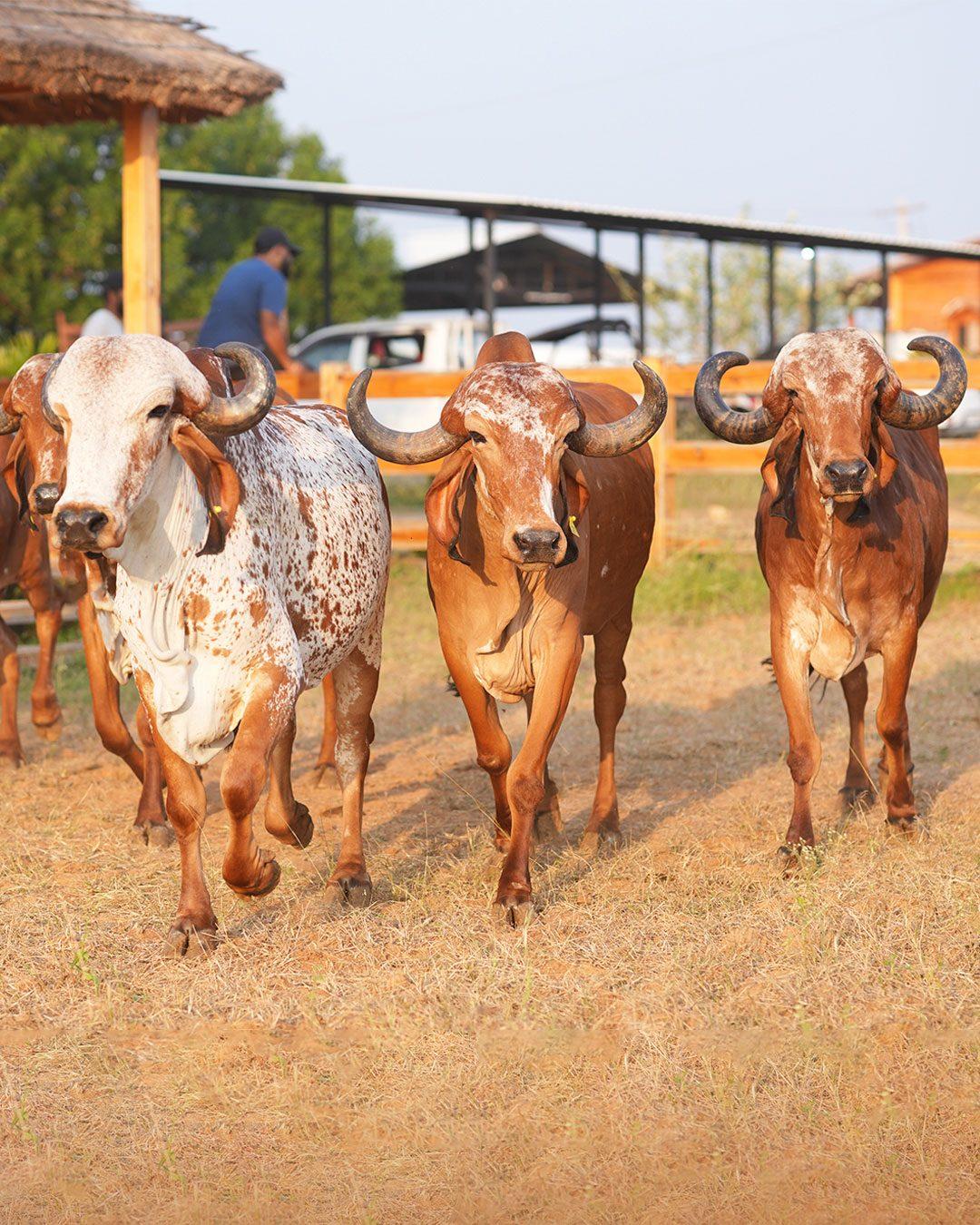
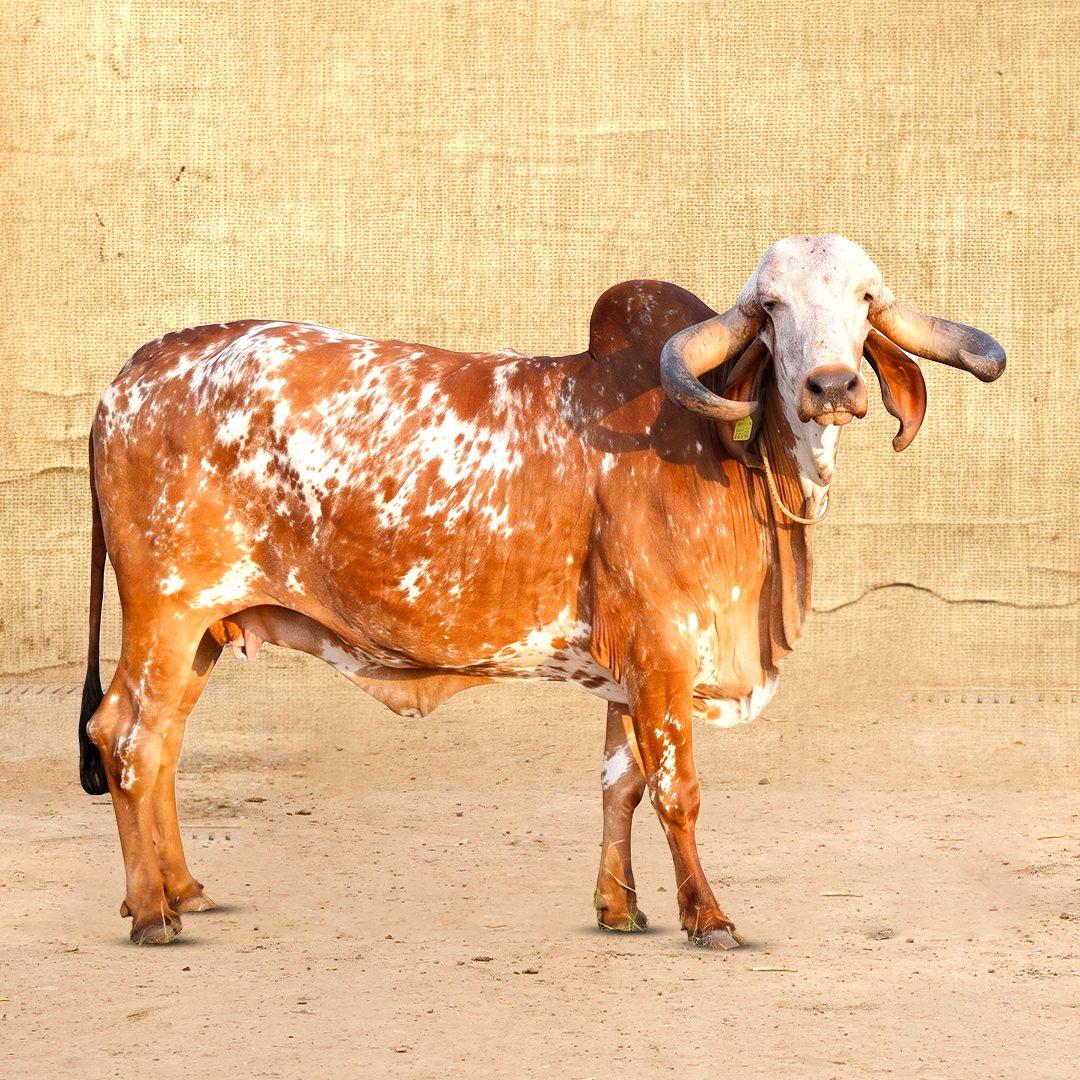
- Mostly pure red, sometimes speckled red.
- Horns
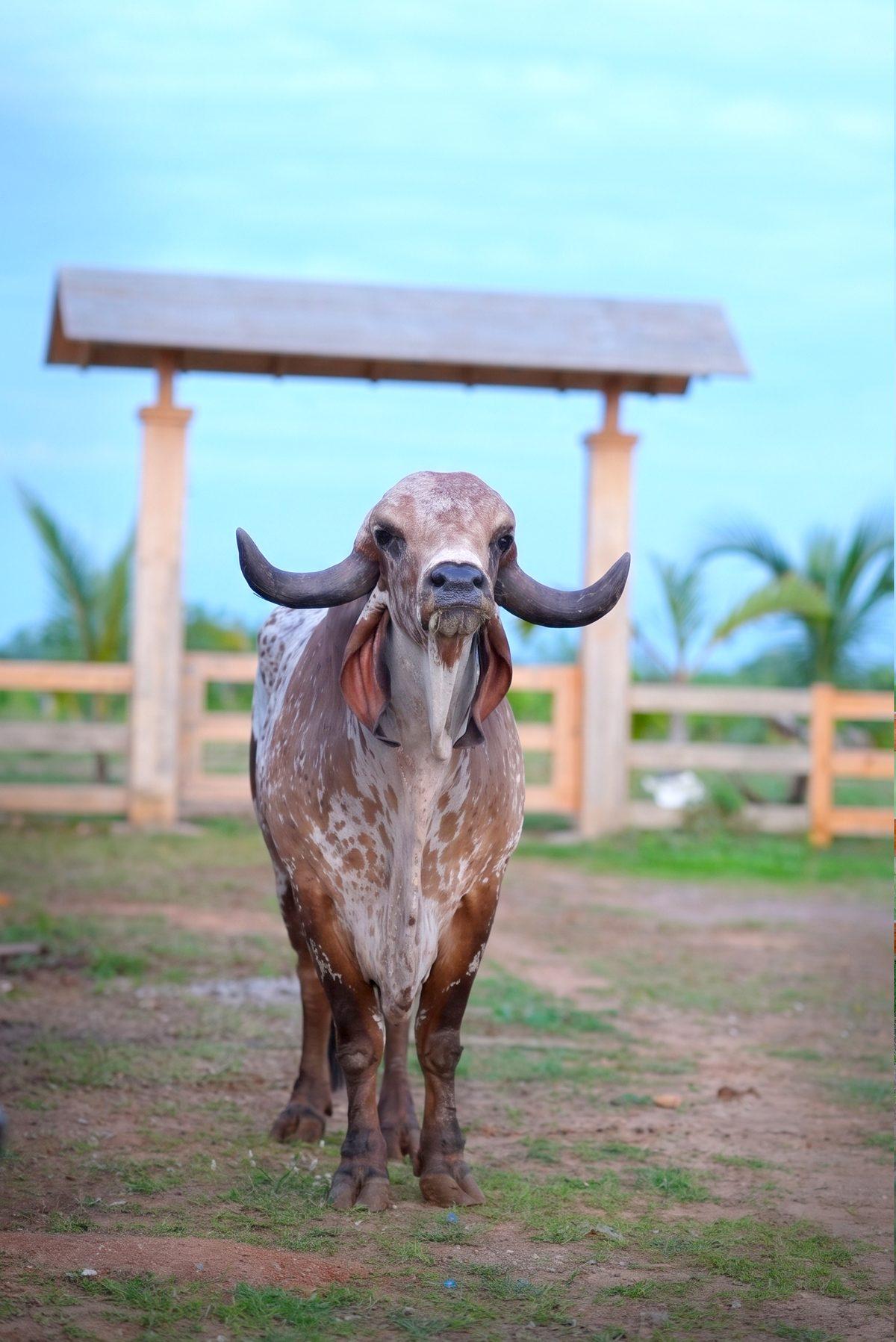
- Curve sideways, down and back, then up and forward in a spiral, giving a distinctive half-moon shape.
- Ears
- Long and pendulous, folded like a leaf.
Size
- Cow
- 310 kg
- Bull
- 544 kg
- Cow height
- 131 cm
- Bull height
- 160 cm
Average adult size, ICAR-NBAGR.
About Gir
Why Gir is our flagship
Gir combines consistent yield and high fat content with exceptional heat tolerance and strong natural immunity. Gir cows stay productive for longer than most crossbreds, and they are highly compatible with OPU and IVF.
- Consistent yield with high fat content
- Exceptional heat tolerance
- Strong natural immunity
- Longer productive lifespan than most crossbreds
- Highly compatible with OPU / IVF
The Brazil connection
Gir cattle exported from India generations ago became the foundation of Brazil’s dairy Zebu industry, now the largest bovine IVF market in the world. That is the direct link to our Brazilian collaboration: the expertise built on Indian Gir is coming home to Indian Gir.
Strengths in the field
High adaptability and consistent milk productivity
Built for
- Hardy: survives and produces in difficult environments
- Tolerant of heat and stress
- Resistant to many tropical diseases
Used for
- Milk
- Draught: Gir bullocks pull heavy loads on sandy, black or rocky soils
Around the world
From Saurashtra to Brazil
Gir has been exported to Brazil, the USA, Venezuela and Mexico. In Brazil it has been formally recorded since 1938, with more than 600,000 purebreds registered, and Brazil now holds more Gir cows than India.
Decades of sire selection lifted the average Brazilian Gir cow to about 4,500 kg per 305-day lactation. Crossed with Holstein, Gir created the Girolando (5/8 Holstein, 3/8 Gir), which supplies about 80% of Brazil’s milk. Brazil is now the largest bovine IVF market in the world, built on Indian genetics.
- Brazil
- USA
- Venezuela
- Mexico
Breed records
The published facts in one place. Averages, not guarantees. Individual animals and well-run herds can do far better.
| Record | Gir |
|---|---|
| Species | Cattle · Bos indicus (zebu) |
| Native tract | Amreli, Bhavnagar, Junagadh and Rajkot districts in the Saurashtra region of Gujarat, in and around the Gir forest. |
| Also known as | Bhodali, Desan, Gujarati, Kathiawari, Sorthi, Surati |
| Typical daily yield, good management | 12–15 litres/day |
| National average per lactation | 2,110 kg (range 800–3,300 kg) |
| Milk fat | 4.6% |
| Milk type | A2 (indigenous zebu breeds are predominantly A2A2) |
| Age at first calving | 46 months |
| Calving interval | 13.4 months |
| Cow weight | 310 kg |
| Bull weight | 544 kg |
| Population | About 13.8 lakh Gir in India’s 2013 breed survey. |
What to know before you choose
Plan for a long rearing period
Gir heifers calve for the first time at around 46 months on average, so budget for nearly four years before the first lactation.
Genetics matter more than the label
The same breed averages about 2,100 kg per lactation in India and about 4,500 kg in Brazil. The difference is decades of selecting the right donors and sires.
Rich milk
An average fat content of 4.6% makes Gir a strong fit where milk is priced on fat.
Is this the right breed for you?
Choosing the right breed is the foundation of a successful dairy operation.
- 01How hot and dry does it get on your land?
- 02Can you hold feed quality through a bad season?
- 03Does your market pay a premium for A2 milk?
- 04How close is your nearest competent vet?
Sources and other breeds
Sources (6)
- ICAR-NBAGR breed registry (AGRI-IS)
- NDDB Dairy Knowledge Portal: Gir
- Gir cattle breed of India: characteristics and present status: Animal Genetic Resources (Cambridge)
- Mukhopadhyay et al. 2025, Pesquisa Agropecuária Brasileira: Indian zebu in Brazil
- Embrapa: Brazilian Dairy Gir programme
- Sodhi et al. 2012, Indian Journal of Animal Sciences: A1/A2 β-casein in Indian cattle
- National averages come from the ICAR-NBAGR breed registry and the NDDB Dairy Knowledge Portal.
Interested in Gir genetics?
Tell us about your herd and we will help you decide whether this breed, and IVF, makes sense for you.