Balanced Performer
Rathi
Rathi is the milk cow of the Thar desert. It produces on wheat straw and desert grasses, through 50 °C summers and near-freezing winters, with little shelter, and the best cows give far more than the average.
Cattle · Bos indicus (zebu)
- Adaptability to harsh climates
- Hardy nature
At a glance
Two kinds of number, side by side: what this breed typically gives under good management, and the national breed average recorded by ICAR-NBAGR across every kind of farm.
- Litres a day, good management
- 10–12
- Hebbevu’s typical range
- Per lactation, national average
- 1,560 kg
- ICAR-NBAGR breed average
- Milk fat
- 3.7–4.0%
- Cow body weight
- 295 kg
Selected Rathi cows have produced about 4,800 kg in a lactation at the farmer’s door.
Getting to know the Rathi
Where it comes from
Bikaner, Ganganagar and Jaisalmer in Rajasthan, concentrated in Loonkaransar tehsil, the ‘Rathi tract’ of the Thar desert.
Named after the Raths, a pastoral community of the region. The breed is thought to blend Sahiwal, Red Sindhi, Tharparkar and Dhanni, mostly Sahiwal.
How to recognise it
- Coat
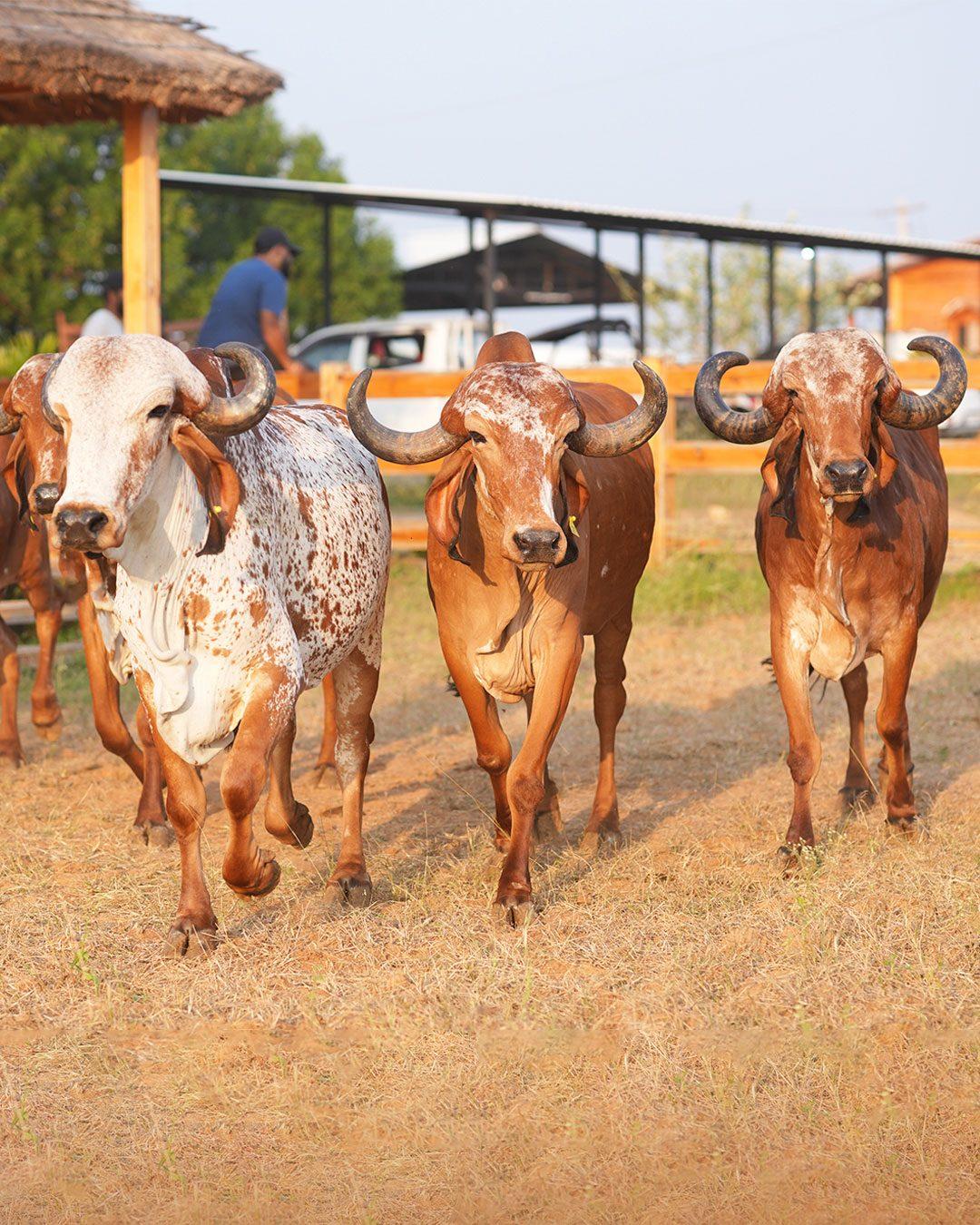
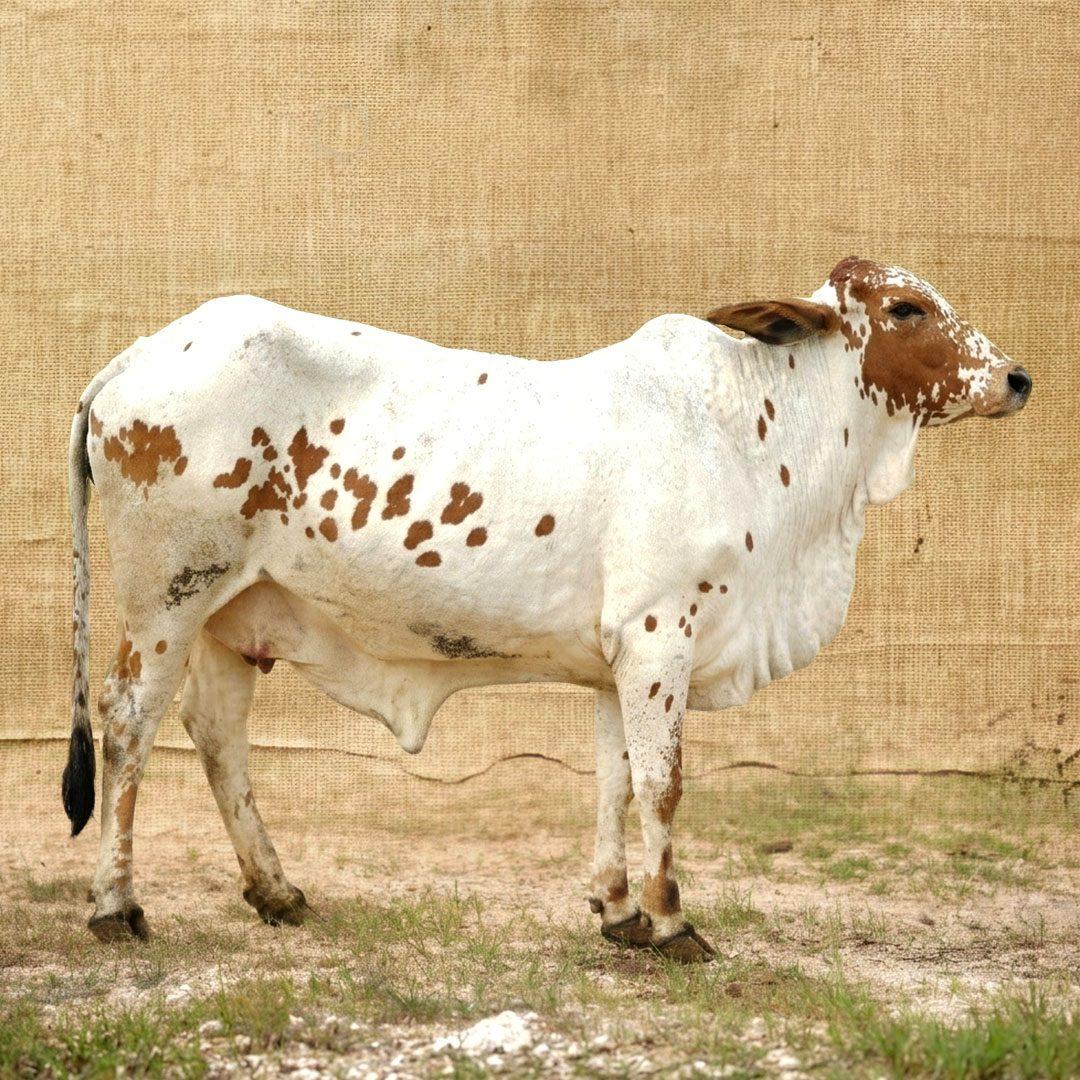
- Brown with white patches; all-brown, or black with white patches, also occur. The lower body is lighter.
- Horns
- Short to medium, curving outward, upward and inward.
- Build
- A broad, slightly dished face, a fine dewlap and a long tail.
Size
- Cow
- 295 kg
- Cow height
- 115 cm
Average adult size, ICAR-NBAGR.
Strengths in the field
Ideal for desert and semi-arid regions
Built for
- Copes with about 50 °C summers, near-freezing winters and under 200 mm of rain
- Produces on wheat straw, pala leaves and sewan grass
- Thrives with little shelter
Used for
- Milk, a major source of livelihood in its home region
Breed records
The published facts in one place. Averages, not guarantees. Individual animals and well-run herds can do far better.
| Record | Rathi |
|---|---|
| Species | Cattle · Bos indicus (zebu) |
| Native tract | Bikaner, Ganganagar and Jaisalmer in Rajasthan, concentrated in Loonkaransar tehsil, the ‘Rathi tract’ of the Thar desert. |
| Typical daily yield, good management | 10–12 litres/day |
| National average per lactation | 1,560 kg (range 1,062–2,810 kg) |
| Milk fat | 3.7–4.0% |
| Milk type | A2 (indigenous zebu breeds are predominantly A2A2) |
| Age at first calving | 46 months |
| Calving interval | 17.1 months |
| Cow weight | 295 kg |
| Population | About 8.7 lakh Rathi in India’s 2013 breed survey. |
What to know before you choose
Made for dry country
Where water and fodder are short, Rathi keeps producing when more demanding breeds would not.
Fertility is the bottleneck
An average calving interval of about 17 months is the breed’s biggest economic drag. Reproductive management pays off quickly here.
A wide range
Yields run from about 1,060 to 2,800 kg per lactation. That spread is exactly what careful selection, and IVF, can work with.
Is this the right breed for you?
Choosing the right breed is the foundation of a successful dairy operation.
- 01How hot and dry does it get on your land?
- 02Can you hold feed quality through a bad season?
- 03Does your market pay a premium for A2 milk?
- 04How close is your nearest competent vet?
Sources and other breeds
Sources (2)
- ICAR-NBAGR breed registry (AGRI-IS)
- NDDB Dairy Knowledge Portal: Rathi
- National averages come from the ICAR-NBAGR breed registry and the NDDB Dairy Knowledge Portal.
Interested in Rathi genetics?
Tell us about your herd and we will help you decide whether this breed, and IVF, makes sense for you.